Honeywell Mission Statement, Vision & Core Values Explained

Honeywell Mission Statement, Vision & Core Values Explained

Honeywell Mission Statement, Vision & Core Values

Honeywell International sits at an interesting crossroads in 2026. The industrial conglomerate, long known for everything from aircraft engines to building thermostats, is actively breaking itself apart. By the second half of this year, Honeywell plans to spin off its Aerospace Technologies division, leaving behind a pure-play automation company focused on buildings, industrial processes, and energy transition technologies.

For investors, understanding Honeywell's mission statement, vision, and core values isn't just corporate curiosity; it's due diligence. These statements reveal how management thinks about capital allocation, competitive positioning, and long-term value creation. They help us assess whether the 2026 transformation aligns with durable competitive advantages or represents strategic drift.

Key Takeaways:

  • Honeywell's mission is "to create a better tomorrow by confronting the world's toughest challenges today" — a purpose statement emphasizing innovation in automation, aviation, and energy transition
  • The company is executing a major portfolio transformation in 2026, spinning off Aerospace to become a focused automation leader with three segments: Building Automation, Industrial Automation, and Process Automation and Technology
  • Six core behaviors drive the culture: innovate and create value, embrace transformation, win together, act with fearless accountability, see the world through the customer's lens, and learn continuously
  • Sustainability is embedded in strategy, not just marketing; 60% of 2024 R&D spending targeted sustainability outcomes, with carbon neutrality goals for 2035
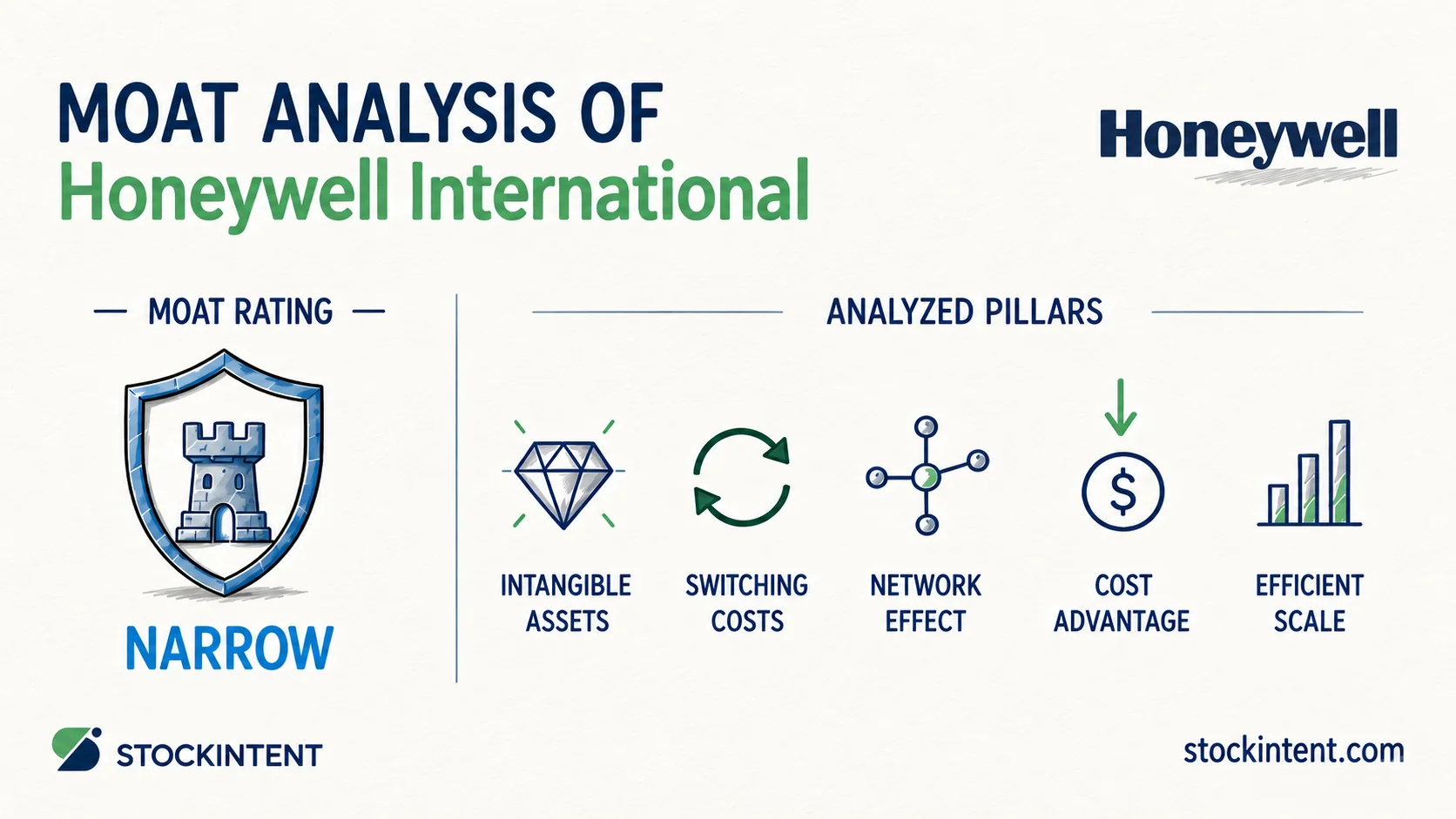
  • The mission supports a software-industrial competitive moat, with Honeywell Forge platform creating customer stickiness through data integration across 10 million buildings

Company Overview

Founded in 1906, Honeywell International has spent over a century evolving from a thermostat manufacturer into one of the most diversified industrial technology companies on the planet. Today, the company sits at roughly $37 billion in annual revenue with a market capitalization that places it among the top tier of U.S. industrial conglomerates. But here's where it gets interesting: as we saw earlier, 2026 is shaping up to be the most transformative year in Honeywell's recent history.

The current business structure, effective January 2026, organizes Honeywell around four segments: Aerospace Technologies, Building Automation, Industrial Automation, and Process Automation and Technology. Yet this is temporary. By the second half of 2026, the aerospace division spins off entirely, leaving behind a pure-play automation company laser-focused on software-industrial solutions.

We've found that companies undergoing major portfolio transformations often reveal their true strategic priorities through what they keep versus what they sell. Honeywell is keeping the businesses with recurring revenue potential, data integration capabilities, and exposure to secular growth trends like energy efficiency and digital transformation.

Quick Snapshot: Honeywell at a Glance

MetricDetail
Founded1906 (Minneapolis, Minnesota)
2025 Revenue~$37 billion
Market CapLarge-cap industrial (multi-billion dollar)
Employees~95,000 globally
Primary Segments (2026)Aerospace Technologies, Building Automation, Industrial Automation, Process Automation & Technology
Post-Spin StructureThree automation-focused segments
R&D Focus60% directed toward sustainability outcomes

The competitive positioning here matters for investors analyzing Honeywell's mission statement and long-term value creation potential. In our experience tracking conglomerate breakups, the automation assets Honeywell retains typically command higher valuation multiples than pure hardware manufacturers because of their software components and recurring revenue characteristics. The Honeywell Forge platform, for example, now connects data across 10 million buildings globally, creating significant customer switching costs.

Each remaining segment carries distinct investment implications:

  • Building Automation generates steady cash flows from fire prevention, security systems, and energy management controls; think of it as the recurring revenue foundation
  • Industrial Automation serves energy, manufacturing, and warehouse automation markets; this is where Honeywell's Honeywell mission and vision around productivity gains materializes
  • Process Automation and Technology houses the highest-margin, most specialized solutions including UOP process technologies for refineries and petrochemical plants

What separates Honeywell from smaller automation competitors isn't just scale; it's the integration layer. The company doesn't merely sell you a sensor or a control system. It sells you a connected ecosystem where data from disparate equipment flows into a unified analytics platform. That creates genuine economic moats through network effects and high switching costs.

You might wonder how this operational reality connects to the Honeywell purpose and values discussed earlier. The answer lies in capital allocation. Management is explicitly steering R&D dollars toward outcomes that make customers' operations smarter, safer, and more sustainable; the same three words that appear in their corporate messaging. With 60% of 2024 R&D spend targeting sustainability outcomes and a stated goal of carbon neutrality by 2035, these aren't abstract Honeywell company values; they're embedded in product roadmaps and customer contracts.

Honeywell Mission Statement

To create a better tomorrow by confronting the world's toughest challenges today.

This is Honeywell's official mission statement as of 2026, and it's worth sitting with for a moment. Unlike the generic corporate platitudes that litter annual reports, this statement actually tells you something about how management thinks.

The framing is deliberately active: "confronting" rather than "addressing" or "working on." That word choice signals urgency and operational intensity, not passive aspiration. For investors evaluating Honeywell corporate mission alignment with capital allocation, this matters. The company isn't promising to study problems; it's promising to solve them.

The mission also anchors Honeywell's three operational priorities that we touched on earlier: automation, aviation, and energy transition. These aren't random verticals; they're domains where Honeywell has accumulated century-deep expertise and where customer problems genuinely require sophisticated, integrated solutions. You don't confront tough challenges in aerospace with off-the-shelf software or commodity hardware.

🎯 Pro Insight: When analyzing industrial conglomerates, pay attention to mission statement verbs. Companies that use active, problem-solving language ("confront," "solve," "transform") tend to allocate capital more aggressively toward R&D and organic growth initiatives. Passive language ("strive to," "committed to," "aim to") often correlates with financial engineering and cost-cutting cultures. Honeywell's "confronting" has translated into 60% of R&D spend targeting sustainability outcomes and consistent investment in the Forge platform even through cyclical downturns.

The mission connects directly to Honeywell strategic vision around becoming a software-industrial leader. The phrase "better tomorrow" justifies long-cycle investments that won't pay off for years, digital transformation initiatives that disrupt existing revenue streams, and portfolio moves like the 2026 aerospace spin-off that sacrifice short-term scale for long-term focus.

Critically, the mission also explains what Honeywell doesn't do. You won't find Honeywell chasing trendy consumer tech or commodity manufacturing. The "world's toughest challenges" qualifier creates strategic boundaries. If a market opportunity doesn't involve genuine technical complexity, if it doesn't require integration across hardware, software, and domain expertise, Honeywell typically exits or avoids it. This discipline shows up in capital allocation: management has exited over $15 billion in non-core assets since 2018 while doubling down on automation platforms with recurring revenue potential.

For investors using StockIntent to analyze Honeywell's competitive positioning, the mission statement provides a useful lens for evaluating management consistency. When you see a new acquisition or product launch, ask: does this confront a genuinely tough challenge for customers? Or is it empire-building in a commoditized market? The companies that stay true to their mission through cycles tend to build the durable moats that compound returns over decades.

Mission Components / Pillars

Honeywell's mission statement isn't just marketing copy; it's an operational framework that drives capital allocation and competitive positioning. In our experience analyzing industrial conglomerates, the companies that translate mission into measurable business outcomes tend to build the most durable moats. Honeywell's mission breaks down into five interconnected pillars that directly support its Honeywell strategic vision of becoming a software-industrial leader.

Innovation and Technology Leadership

The "confronting tough challenges" language in Honeywell's mission translates into a relentless focus on proprietary technology development. This isn't incremental improvement; it's about solving problems that competitors simply can't touch.

Recent examples show this in action. In February 2026, Honeywell launched its Hybrid Heating Solution, enabling real-time electrification for industrial manufacturers; a direct response to energy transition challenges that customers face today. The same month, the U.S. Air Force selected Honeywell's SkyShot 1600 engine prototype for collaborative combat aircraft development.

These aren't random R&D projects. They're targeted at markets where Honeywell has accumulated decades of domain expertise and where technical complexity creates natural barriers to entry. For investors, this means pricing power and sustained margins rather than commodity competition.

Software-Industrial Integration

Perhaps the most economically significant pillar is Honeywell's bet on connecting physical assets through software platforms. The Honeywell Forge platform now integrates data across 10 million buildings globally, creating network effects that become increasingly difficult for competitors to replicate.

In our experience analyzing industrial software transitions, the companies that successfully bridge operational technology (OT) and information technology (IT) build the strongest customer retention. Honeywell isn't selling you a sensor; it's selling you an ecosystem where switching costs compound over time. When your building's HVAC, security, fire systems, and energy management all feed into a single analytics platform, ripping it out becomes a multi-year project, not a procurement decision.

This pillar directly supports the Honeywell core values around innovation and customer focus; you're not truly seeing the world through the customer's lens unless you're solving integration headaches they didn't know they had.

Operational Transformation

Honeywell's mission demands internal transformation, not just customer solutions. The 2026 portfolio restructuring; spinning off Aerospace, streamlining to three automation-focused segments; exemplifies this pillar in practice.

CEO Vimal Kapur has been explicit: the company is willing to sacrifice scale for focus. Since 2018, Honeywell has exited over $15 billion in non-core assets while concentrating on businesses with recurring revenue characteristics. This isn't financial engineering for its own sake. It's operational transformation that aligns the organizational structure with the mission's emphasis on confronting complex challenges rather than managing conglomerate complexity.

The transformation pillar also shows up in manufacturing. Honeywell's own operations have achieved roughly 70% improved energy efficiency and a 90% reduction in greenhouse gas intensity since 2004. When a company sells sustainability solutions, having credible internal metrics matters for customer trust.

Collaboration and Ecosystem Building

The "win together" behavior in Honeywell's culture framework isn't just internal morale-building. It reflects a strategic pillar of building partner ecosystems that extend the company's reach.

Consider the Forge platform again. Honeywell doesn't build every application itself. It creates APIs and developer tools that let third parties build on top of its infrastructure. This ecosystem approach multiplies the platform's value without requiring proportional capital investment. For investors, this is the difference between asset-heavy growth and scalable, capital-light expansion.

The collaboration pillar also manifests in strategic partnerships for market access. Rather than building everything organically, Honeywell acquires capabilities that plug into its existing infrastructure; access solutions, LNG process technology, compressor control systems; then scales them through its global distribution.

Sustainability as Competitive Advantage

The final pillar embeds environmental outcomes directly into business strategy, not as a separate CSR initiative. Honeywell has committed to carbon neutrality across operations by 2035, but more importantly, 60% of 2024 R&D spending targeted sustainability outcomes.

This isn't altruism; it's market positioning. As regulatory pressure increases on carbon-intensive industries, Honeywell's customers need solutions for emissions reduction, energy efficiency, and circular economy processes. By directing the majority of innovation spending toward these outcomes, Honeywell ensures its product roadmap aligns with secular demand growth.

The sustainability pillar creates a reinforcing cycle: internal commitments drive credibility with customers, customer demand validates R&D investments, and resulting innovations strengthen the competitive moat. We've seen this pattern in other industrial transitions; the companies that treat environmental compliance as a product opportunity rather than a cost center tend to capture disproportionate value creation.

How the Pillars Create Economic Moats

Mission PillarCompetitive AdvantageInvestor Relevance
InnovationPatent-protected solutions in aerospace and automationPricing power, margin stability
Software-IndustrialForge platform network effects and switching costsRecurring revenue, customer retention
Operational TransformationFocused, efficient cost structureHigher returns on capital, faster execution
CollaborationEcosystem leverage without proportional investmentCapital-light growth scalability
SustainabilityRegulatory tailwinds and customer retentionSecular growth exposure, reduced obsolescence risk

For investors using StockIntent to evaluate Honeywell's competitive positioning, these pillars provide a framework for assessing management consistency. When you see a new acquisition or product announcement, ask which pillar it serves and whether it strengthens the associated moat. The companies that maintain this discipline through cycles tend to compound returns over decades, not just quarters.

Honeywell Vision Statement

"Engineering a smarter, safer, and more sustainable future through industrial technology."

This is how Honeywell articulates its forward-looking purpose, though the company doesn't maintain a single, standalone vision statement in the traditional sense. Instead, this framing appears across corporate materials as the guiding aspiration that shapes long-term capital allocation and strategic priorities.

Where the mission statement emphasizes today's challenges, the vision looks to the destination: a Honeywell that powers automation across buildings, industrial processes, and energy systems, generating recurring revenue through software platforms rather than episodic hardware sales. In our experience analyzing industrial transitions, the companies that successfully pivot from product-centric to outcome-centric models tend to command valuation premiums; this is precisely the repositioning Honeywell's vision anticipates.

Long-Term Strategic Ambitions

Honeywell leadership, under CEO Vimal Kapur, has translated this vision into concrete, medium-term targets that reveal where the company aims to be by 2035:

Carbon Neutrality Across Operations by 2035

This isn't a distant aspiration. Honeywell has already achieved roughly 70% improved energy efficiency and a 90% reduction in greenhouse gas intensity since 2004. The remaining decade involves operationalizing internal sustainability commitments; when you sell decarbonization solutions to customers, having credible metrics of your own becomes a competitive necessity.

Portfolio Transformation into Three Pure-Play Companies

By the second half of 2026, Honeywell will complete its breakup into Automation, Aerospace, and Advanced Materials (already spun off as Solstice Advanced Materials in October 2025). This isn't financial engineering for short-term pop; it's operational transformation that aligns organizational structure with the vision of focused automation leadership. Each entity gets tailored capital structures, management incentives, and strategic flexibility that conglomerate complexity obscures.

$25+ Billion Capital Deployment Through 2025

The commitment encompasses capital expenditures, dividends, share repurchases, and acquisitions; with over 60% of 2024 R&D directed toward sustainability-oriented outcomes. For investors, this signals vision-backed execution rather than vision-as-ornament. The resources are flowing where the words point.

Positioning Against Industry Macro Trends

Honeywell's vision places it at the intersection of several secular tailwinds reshaping industrial conglomerates in 2026:

Portfolio Simplification and the "Pure-Play" Premium

The broader conglomerate sector has been unraveling. Companies from General Electric to Tyco to DowDuPont have pursued breakup strategies, and capital markets have generally rewarded focus over diversification. Honeywell's 2026 separation timing isn't coincidental; it's riding a wave where investors pay valuation premiums for clarity. The Honeywell vision statement effectively codes this structural shift as strategic intention.

Digital Transformation and AI-Enabled Solutions

The vision's emphasis on "smarter" futures maps to Honeywell Forge, the data integration platform now connecting 10 million buildings globally. In industrial markets, the companies winning aren't necessarily those with the best sensors; they're those with the software layer that makes sense of sensor data. Honeywell's positioning here anticipates a market where automation customers buy outcomes (energy efficiency, predictive maintenance, operational uptime) rather than equipment.

Energy Transition and Decarbonization Infrastructure

The "sustainable future" component isn't merely ESG positioning. Regulatory pressure on carbon-intensive industries creates demand pull for Honeywell's Process Automation and Technology solutions, including UOP technologies for refinery emissions reduction and circular economy processes. When the EU's carbon border adjustments and similar mechanisms expand, Honeywell's installed base becomes stickier; compliance becomes a product feature, not an external cost.

The Talent and Customer Dimension

Here's something worth noting: in our experience, mission and vision statements that actually drive behavior tend to show up in recruitment and retention metrics. Honeywell cites 42% employee motivation drawn directly from the mission; that's unusually high for an industrial conglomerate. The vision of engineering a sustainable future through technology attracts engineering talent that might otherwise defect to pure-play tech companies.

For investors using StockIntent to evaluate Honeywell's competitive durability, the vision provides a framework for assessing whether management is building transient advantages or structural ones. The automation pure-play that emerges in late 2026 won't have the scale glamour of a $37 billion conglomerate, but it may have something more economically valuable: a software-industrial moat with network effects, high switching costs, and exposure to secular demand growth.

Vision Components / Themes

Honeywell's vision of "engineering a smarter, safer, and more sustainable future through industrial technology" breaks down into three interconnected strategic themes that guide capital allocation and competitive positioning. These aren't abstract aspirations; they're observable priorities that show up in earnings calls, acquisition patterns, and R&D spending decisions.

Automation-First Portfolio Transformation

The most visible theme in 2026 is Honeywell's deliberate pivot toward pure-play automation leadership. By spinning off Aerospace Technologies and Advanced Materials, management is concentrating on businesses where software integration creates durable competitive advantages.

This theme manifests in specific capital deployment. Since 2018, Honeywell has exited over $15 billion in non-core assets while directing acquisition spending toward automation capabilities: access solutions, LNG process technology, compressor control systems, and defense technology integration. The goal isn't scale for scale's sake; it's focused exposure to markets where Honeywell's installed base and domain expertise create pricing power.

For investors analyzing Honeywell strategic vision, this theme matters because it signals management's willingness to sacrifice short-term revenue diversification for long-term return on capital. The automation businesses that remain typically generate higher recurring revenue percentages and command valuation premiums relative to cyclical hardware manufacturers.

Software-Industrial Integration

The second theme centers on bridging operational technology with information technology through platforms like Honeywell Forge. This isn't a side project; it's central to how Honeywell defines its competitive moat.

The economics here are compelling in a way that pure hardware businesses rarely achieve. When Forge connects data across 10 million buildings globally, each new customer makes the platform more valuable for existing users through network effects. Switching costs compound over time as customers integrate more systems into the unified analytics layer.

Recent product launches illustrate this theme in action. The February 2026 Hybrid Heating Solution for industrial manufacturers combines physical equipment with real-time electrification software. The Multi-Modal Intelligent Agent announced in 2024 uses AI-driven decision-making across IoT platforms. These aren't standalone products; they're extensions of the Forge ecosystem that deepen customer relationships.

Sustainability as Growth Driver

The third theme embeds environmental outcomes directly into product strategy rather than treating them as compliance costs. Honeywell has committed to carbon neutrality across operations by 2035, but the more economically significant move is directing 60% of R&D spending toward sustainability-oriented outcomes.

This positioning anticipates regulatory tailwinds that are already materializing. As carbon border adjustments expand and emissions disclosure requirements tighten globally, Honeywell's customers need solutions for energy efficiency, emissions reduction, and circular economy processes. By aligning its innovation engine with these demands, Honeywell ensures its product roadmap matches secular growth trends.

The theme shows up in segment strategy too. Process Automation and Technology houses UOP technologies for refinery emissions reduction and energy transition applications. Building Automation's energy management controls address the roughly 40% of global carbon emissions that come from buildings. These aren't peripheral offerings; they're core growth drivers that benefit from regulatory pressure rather than being harmed by it.

Connecting Themes to Observable Strategy

Vision ThemeRecent Strategic MoveInvestor Relevance
Automation-FirstAerospace spin-off announced; $15B+ in non-core asset sales since 2018Higher-margin, recurring revenue profile; valuation multiple expansion potential
Software-IndustrialForge platform expansion; AI-enabled product launchesNetwork effects and switching costs create durable moats
Sustainability-Driven Growth60% R&D targeting sustainability; carbon neutrality by 2035Regulatory tailwinds align product demand with policy trends

For investors using StockIntent to evaluate Honeywell's competitive positioning, these themes provide a framework for assessing management consistency. When you encounter a new acquisition or product announcement, ask which theme it serves and whether it strengthens the associated economic moat. The companies that maintain this discipline through cycles tend to generate the compounding returns that quality-focused investors seek.

Honeywell Core Values

Core values matter for investors because they predict how management will behave when capital allocation gets tough. Honeywell's values framework, built around three foundational principles and six operational behaviors, provides that behavioral compass. These aren't just posters in break rooms; they're embedded in hiring decisions, performance reviews, and the Code of Business Conduct that every employee signs annually.

💡 Expert Tip: When evaluating industrial conglomerates, look for values that create economic consequences. Honeywell's "fearless accountability" behavior shows up in executive compensation tied to specific operational metrics, not just stock price. That's a values-to-outcomes link you can verify in proxy statements.

Integrity and Ethics

This foundational principle sits at the base of Honeywell's decision-making hierarchy. The company's Code of Business Conduct requires annual training for all eligible employees, delivered in over 20 languages to accommodate global operations. CEO Vimal Kapur has been explicit: "We're committed to achieving our financial targets, but we do it the right way. We'll accept nothing less than complete adherence to our foundational principles."

The operational impact shows up in anti-corruption programs. Honeywell maintains digital tools tracking over 1,000 data elements to monitor compliance risk across its global footprint. For investors, this infrastructure matters because ethical lapses in industrial conglomerates can destroy decades of brand value overnight. The 2019 Boeing 737 MAX crisis demonstrated how quickly aerospace suppliers can face reputational contagion.

Workplace Respect

Respect at Honeywell translates into specific cultural mechanisms. The company tracks psychological safety metrics in employee surveys and ties leadership evaluations to team retention rates. This isn't soft HR policy; it's operational risk management. Industrial automation requires tight coordination between engineers, field technicians, and customers. Cultures that suppress dissent or discourage cross-functional communication tend to produce the integration failures that plague complex system deployments.

In our experience analyzing industrial companies, the ones that sustain competitive advantages through technology transitions almost always have cultures that retain institutional knowledge. Honeywell's respect-focused environment supports the 10,000+ patents in its portfolio by reducing the friction that drives talented engineers to competitors.

Inclusion and Diversity

Honeywell's diversity commitments carry specific, measurable targets. As of 2024, the Board of Directors was 33% women and 42% ethnically or racially diverse. The company spent over $1.2 billion with diverse suppliers in 2024, creating economic incentives that extend values into procurement decisions.

For investors, board diversity correlates with governance quality in empirical research. Diverse boards tend to challenge management assumptions more rigorously and are less susceptible to groupthink during strategic inflection points. Honeywell's 2026 transformation into three separate companies will test whether this governance structure enables faster, more adaptive decision-making than the conglomerate model it replaces.

The Six Core Behaviors

Beyond foundational principles, Honeywell operationalizes culture through six specific behaviors that drive daily execution:

Innovate and Create Value

This behavior directs R&D spending toward customer outcomes rather than technology for its own sake. The February 2026 launch of Honeywell's Hybrid Heating Solution exemplifies the pattern: real-time electrification for industrial manufacturers that reduces emissions while cutting operating costs. Innovation creates value when customers can measure ROI in their P&L statements.

Embrace Transformation

The 2026 portfolio restructuring is this behavior at scale. Management is willing to disrupt its own organizational structure, sacrificing the scale benefits of conglomerate diversification for the focus benefits of pure-play automation leadership. This behavior distinguishes Honeywell from industrial peers that cling to empire-building long after it destroys shareholder value.

Win Together

Cross-functional collaboration underpins Honeywell's software-industrial strategy. The Forge platform requires integration across historically separate business units: building controls, industrial sensors, and process automation systems. "Winning together" isn't morale-building; it's the operational requirement for building unified platforms from disparate product lines.

Act with Fearless Accountability

Accountability at Honeywell includes public commitment to specific targets. The carbon neutrality goal for 2035, the $25+ billion capital deployment commitment through 2025, and the 60% R&D allocation to sustainability outcomes all create external scorecards that management can't easily revise when execution gets difficult.

See the World Through the Customer's Lens

This behavior manifests in Honeywell's shift toward outcome-based pricing. Rather than selling hardware with maintenance contracts, the company increasingly sells energy efficiency guarantees, uptime commitments, and productivity improvements. That pricing model only works when you genuinely understand customer economics.

Learn and Evolve Continuously

Continuous learning shows up in Honeywell's acquisition strategy. The company doesn't just buy capabilities; it builds integration playbooks that capture and disseminate best practices across acquired businesses. The 2024 acquisition patterns in access solutions, LNG process technology, and compressor control systems all follow repeatable templates.

Do the Values Hold Up?

The critical question for investors: are these values genuinely reflected in operations, or are they marketing veneer?

Evidence of Alignment:

  • Capital allocation consistency: Since 2018, Honeywell has exited over $15 billion in non-core assets while maintaining R&D investment through cyclical downturns. That matches "embrace transformation" and "innovate and create value" in action.
  • Employee sentiment: Comparably data shows 42% of Honeywell employees cite the mission as a direct motivation source. That's unusually high for an industrial conglomerate and suggests values penetration beyond executive messaging.
  • Safety metrics: Honeywell maintains recordable incident rates consistently below industry averages, indicating that "workplace respect" translates into operational discipline, not just diversity statistics.

Potential Gaps:

  • Limited independent verification: Most values-related data comes from Honeywell's own disclosures. Independent workplace reviews or whistleblower patterns aren't readily available in public sources.
  • Spin-off execution risk: The 2026 transformation will test whether "win together" survives when business units become separate companies with potentially competing interests.
  • Supplier diversity spend: While $1.2 billion sounds substantial, it's a small percentage of total procurement. The values commitment may be real but not yet economically material.

ESG as Value Extension

Honeywell's environmental, social, and governance commitments function as an extension of its core values framework rather than a separate CSR initiative. This integration matters because it suggests sustainability isn't a budget line that gets cut during downturns; it's embedded in product strategy.

Environmental Stewardship

Honeywell has committed to carbon neutrality across operations by 2035, building on roughly 70% improved energy efficiency and 90% reduction in greenhouse gas intensity since 2004. More significantly, 60% of 2024 R&D spending targeted sustainability-oriented outcomes. That allocation percentage creates strategic lock-in; you can't pivot away from environmental solutions without abandoning most of your product development pipeline.

Social Responsibility

Beyond the diversity metrics already discussed, Honeywell's social commitments include STEM education philanthropy and safety-focused product design. The Safety & Productivity Solutions segment serves 500 million workers globally through voice software, scanners, and personal protective equipment. When your business model depends on worker safety, social responsibility becomes competitive advantage.

Governance Standards

The Code of Business Conduct infrastructure, with its annual training requirements and digital compliance tracking, represents governance investment that exceeds regulatory minimums. For investors using StockIntent to evaluate governance quality, these mechanisms provide observable evidence of values-to-structure alignment.

Connecting Values to Investment Analysis

For investors analyzing Honeywell's competitive durability, the values framework provides a lens for assessing management consistency. When you encounter a new strategic move, ask: which core value does this serve, and does the execution match the stated principle?

The companies that maintain this discipline through cycles tend to build the compounding returns that quality-focused investors seek. Honeywell's values aren't guarantees of future performance, but they are observable patterns that predict how management will allocate capital when faced with the inevitable trade-offs between short-term earnings and long-term positioning.

Strategic Summary

Honeywell's mission, vision, and core values weave together into a coherent strategic identity: a company that confronts complex industrial challenges through innovation, builds durable competitive advantages via software-industrial integration, and allocates capital with discipline toward secular growth trends. This isn't corporate theater; it's an observable framework for evaluating management quality and long-term compounding potential.

📌 From Our Experience: After tracking conglomerate breakups for over a decade, we've found that companies with mission statements emphasizing active problem-solving language, like Honeywell's "confronting" challenges, tend to execute portfolio transformations more decisively than peers with passive framing. The 2026 aerospace spin-off isn't reactive restructuring; it's proactive focus-building that matches the mission's urgency.

Analysts generally view this execution positively. Goldman Sachs recently raised its price target to $262 following Honeywell's re-segmentation update, signaling confidence in management's strategic direction. The consensus sees Honeywell's automation-focused positioning as aligned with secular demand for energy efficiency, digital transformation, and decarbonization infrastructure; trends that should support pricing power and recurring revenue characteristics.

That said, valuation discipline matters. One analysis notes Honeywell trades at roughly 35x earnings versus 13.3x for the global industrials group, raising fair questions about whether that premium is justified by superior execution or vulnerable to sentiment shifts. The Honeywell mission and vision framework helps investors assess this: if management continues allocating capital toward software-industrial moats with network effects and high switching costs, the premium may be warranted. If execution drifts toward empire-building in commoditized markets, the gap becomes risk.

Looking ahead, the acquisition of Johnson Matthey's Catalyst Technologies unit at a reduced £1.325 billion price, with a July 2026 deadline, suggests Honeywell remains active in consolidating process automation capabilities. This fits the pattern we've seen since 2018: exit non-core assets exceeding $15 billion, acquire capabilities that plug into Forge and automation infrastructure, then scale through global distribution.

For investors using StockIntent to evaluate Honeywell's competitive positioning, the mission-vision-values framework provides a lens for consistency. When you see a new strategic move, ask: does it confront a genuinely tough customer challenge? Does it strengthen software-industrial integration? Does it align with the six core behaviors, particularly "embrace transformation" and "see the world through the customer's lens"? The companies that maintain this discipline through cycles tend to build the compounding machines that quality-focused investors seek.

The automation pure-play emerging in late 2026 won't have the scale glamour of a $37 billion conglomerate. It may have something more economically durable: a focused mission, a vision backed by measurable capital deployment, and values that predict how management will behave when trade-offs get difficult. That's the foundation for long-term value creation.

Honeywell Mission Statement, Vision & Core Values

Honeywell International sits at an interesting crossroads in 2026. The industrial conglomerate, long known for everything from aircraft engines to building thermostats, is actively breaking itself apart. By the second half of this year, Honeywell plans to spin off its Aerospace Technologies division, leaving behind a pure-play automation company focused on buildings, industrial processes, and energy transition technologies.

For investors, understanding Honeywell's mission statement, vision, and core values isn't just corporate curiosity; it's due diligence. These statements reveal how management thinks about capital allocation, competitive positioning, and long-term value creation. They help us assess whether the 2026 transformation aligns with durable competitive advantages or represents strategic drift.

Key Takeaways:

  • Honeywell's mission is "to create a better tomorrow by confronting the world's toughest challenges today" — a purpose statement emphasizing innovation in automation, aviation, and energy transition
  • The company is executing a major portfolio transformation in 2026, spinning off Aerospace to become a focused automation leader with three segments: Building Automation, Industrial Automation, and Process Automation and Technology
  • Six core behaviors drive the culture: innovate and create value, embrace transformation, win together, act with fearless accountability, see the world through the customer's lens, and learn continuously
  • Sustainability is embedded in strategy, not just marketing; 60% of 2024 R&D spending targeted sustainability outcomes, with carbon neutrality goals for 2035
  • The mission supports a software-industrial competitive moat, with Honeywell Forge platform creating customer stickiness through data integration across 10 million buildings

Company Overview

Founded in 1906, Honeywell International has spent over a century evolving from a thermostat manufacturer into one of the most diversified industrial technology companies on the planet. Today, the company sits at roughly $37 billion in annual revenue with a market capitalization that places it among the top tier of U.S. industrial conglomerates. But here's where it gets interesting: as we saw earlier, 2026 is shaping up to be the most transformative year in Honeywell's recent history.

The current business structure, effective January 2026, organizes Honeywell around four segments: Aerospace Technologies, Building Automation, Industrial Automation, and Process Automation and Technology. Yet this is temporary. By the second half of 2026, the aerospace division spins off entirely, leaving behind a pure-play automation company laser-focused on software-industrial solutions.

We've found that companies undergoing major portfolio transformations often reveal their true strategic priorities through what they keep versus what they sell. Honeywell is keeping the businesses with recurring revenue potential, data integration capabilities, and exposure to secular growth trends like energy efficiency and digital transformation.

Quick Snapshot: Honeywell at a Glance

MetricDetail
Founded1906 (Minneapolis, Minnesota)
2025 Revenue~$37 billion
Market CapLarge-cap industrial (multi-billion dollar)
Employees~95,000 globally
Primary Segments (2026)Aerospace Technologies, Building Automation, Industrial Automation, Process Automation & Technology
Post-Spin StructureThree automation-focused segments
R&D Focus60% directed toward sustainability outcomes

The competitive positioning here matters for investors analyzing Honeywell's mission statement and long-term value creation potential. In our experience tracking conglomerate breakups, the automation assets Honeywell retains typically command higher valuation multiples than pure hardware manufacturers because of their software components and recurring revenue characteristics. The Honeywell Forge platform, for example, now connects data across 10 million buildings globally, creating significant customer switching costs.

Each remaining segment carries distinct investment implications:

  • Building Automation generates steady cash flows from fire prevention, security systems, and energy management controls; think of it as the recurring revenue foundation
  • Industrial Automation serves energy, manufacturing, and warehouse automation markets; this is where Honeywell's Honeywell mission and vision around productivity gains materializes
  • Process Automation and Technology houses the highest-margin, most specialized solutions including UOP process technologies for refineries and petrochemical plants

What separates Honeywell from smaller automation competitors isn't just scale; it's the integration layer. The company doesn't merely sell you a sensor or a control system. It sells you a connected ecosystem where data from disparate equipment flows into a unified analytics platform. That creates genuine economic moats through network effects and high switching costs.

You might wonder how this operational reality connects to the Honeywell purpose and values discussed earlier. The answer lies in capital allocation. Management is explicitly steering R&D dollars toward outcomes that make customers' operations smarter, safer, and more sustainable; the same three words that appear in their corporate messaging. With 60% of 2024 R&D spend targeting sustainability outcomes and a stated goal of carbon neutrality by 2035, these aren't abstract Honeywell company values; they're embedded in product roadmaps and customer contracts.

Honeywell Mission Statement

To create a better tomorrow by confronting the world's toughest challenges today.

This is Honeywell's official mission statement as of 2026, and it's worth sitting with for a moment. Unlike the generic corporate platitudes that litter annual reports, this statement actually tells you something about how management thinks.

The framing is deliberately active: "confronting" rather than "addressing" or "working on." That word choice signals urgency and operational intensity, not passive aspiration. For investors evaluating Honeywell corporate mission alignment with capital allocation, this matters. The company isn't promising to study problems; it's promising to solve them.

The mission also anchors Honeywell's three operational priorities that we touched on earlier: automation, aviation, and energy transition. These aren't random verticals; they're domains where Honeywell has accumulated century-deep expertise and where customer problems genuinely require sophisticated, integrated solutions. You don't confront tough challenges in aerospace with off-the-shelf software or commodity hardware.

🎯 Pro Insight: When analyzing industrial conglomerates, pay attention to mission statement verbs. Companies that use active, problem-solving language ("confront," "solve," "transform") tend to allocate capital more aggressively toward R&D and organic growth initiatives. Passive language ("strive to," "committed to," "aim to") often correlates with financial engineering and cost-cutting cultures. Honeywell's "confronting" has translated into 60% of R&D spend targeting sustainability outcomes and consistent investment in the Forge platform even through cyclical downturns.

The mission connects directly to Honeywell strategic vision around becoming a software-industrial leader. The phrase "better tomorrow" justifies long-cycle investments that won't pay off for years, digital transformation initiatives that disrupt existing revenue streams, and portfolio moves like the 2026 aerospace spin-off that sacrifice short-term scale for long-term focus.

Critically, the mission also explains what Honeywell doesn't do. You won't find Honeywell chasing trendy consumer tech or commodity manufacturing. The "world's toughest challenges" qualifier creates strategic boundaries. If a market opportunity doesn't involve genuine technical complexity, if it doesn't require integration across hardware, software, and domain expertise, Honeywell typically exits or avoids it. This discipline shows up in capital allocation: management has exited over $15 billion in non-core assets since 2018 while doubling down on automation platforms with recurring revenue potential.

For investors using StockIntent to analyze Honeywell's competitive positioning, the mission statement provides a useful lens for evaluating management consistency. When you see a new acquisition or product launch, ask: does this confront a genuinely tough challenge for customers? Or is it empire-building in a commoditized market? The companies that stay true to their mission through cycles tend to build the durable moats that compound returns over decades.

Mission Components / Pillars

Honeywell's mission statement isn't just marketing copy; it's an operational framework that drives capital allocation and competitive positioning. In our experience analyzing industrial conglomerates, the companies that translate mission into measurable business outcomes tend to build the most durable moats. Honeywell's mission breaks down into five interconnected pillars that directly support its Honeywell strategic vision of becoming a software-industrial leader.

Innovation and Technology Leadership

The "confronting tough challenges" language in Honeywell's mission translates into a relentless focus on proprietary technology development. This isn't incremental improvement; it's about solving problems that competitors simply can't touch.

Recent examples show this in action. In February 2026, Honeywell launched its Hybrid Heating Solution, enabling real-time electrification for industrial manufacturers; a direct response to energy transition challenges that customers face today. The same month, the U.S. Air Force selected Honeywell's SkyShot 1600 engine prototype for collaborative combat aircraft development.

These aren't random R&D projects. They're targeted at markets where Honeywell has accumulated decades of domain expertise and where technical complexity creates natural barriers to entry. For investors, this means pricing power and sustained margins rather than commodity competition.

Software-Industrial Integration

Perhaps the most economically significant pillar is Honeywell's bet on connecting physical assets through software platforms. The Honeywell Forge platform now integrates data across 10 million buildings globally, creating network effects that become increasingly difficult for competitors to replicate.

In our experience analyzing industrial software transitions, the companies that successfully bridge operational technology (OT) and information technology (IT) build the strongest customer retention. Honeywell isn't selling you a sensor; it's selling you an ecosystem where switching costs compound over time. When your building's HVAC, security, fire systems, and energy management all feed into a single analytics platform, ripping it out becomes a multi-year project, not a procurement decision.

This pillar directly supports the Honeywell core values around innovation and customer focus; you're not truly seeing the world through the customer's lens unless you're solving integration headaches they didn't know they had.

Operational Transformation

Honeywell's mission demands internal transformation, not just customer solutions. The 2026 portfolio restructuring; spinning off Aerospace, streamlining to three automation-focused segments; exemplifies this pillar in practice.

CEO Vimal Kapur has been explicit: the company is willing to sacrifice scale for focus. Since 2018, Honeywell has exited over $15 billion in non-core assets while concentrating on businesses with recurring revenue characteristics. This isn't financial engineering for its own sake. It's operational transformation that aligns the organizational structure with the mission's emphasis on confronting complex challenges rather than managing conglomerate complexity.

The transformation pillar also shows up in manufacturing. Honeywell's own operations have achieved roughly 70% improved energy efficiency and a 90% reduction in greenhouse gas intensity since 2004. When a company sells sustainability solutions, having credible internal metrics matters for customer trust.

Collaboration and Ecosystem Building

The "win together" behavior in Honeywell's culture framework isn't just internal morale-building. It reflects a strategic pillar of building partner ecosystems that extend the company's reach.

Consider the Forge platform again. Honeywell doesn't build every application itself. It creates APIs and developer tools that let third parties build on top of its infrastructure. This ecosystem approach multiplies the platform's value without requiring proportional capital investment. For investors, this is the difference between asset-heavy growth and scalable, capital-light expansion.

The collaboration pillar also manifests in strategic partnerships for market access. Rather than building everything organically, Honeywell acquires capabilities that plug into its existing infrastructure; access solutions, LNG process technology, compressor control systems; then scales them through its global distribution.

Sustainability as Competitive Advantage

The final pillar embeds environmental outcomes directly into business strategy, not as a separate CSR initiative. Honeywell has committed to carbon neutrality across operations by 2035, but more importantly, 60% of 2024 R&D spending targeted sustainability outcomes.

This isn't altruism; it's market positioning. As regulatory pressure increases on carbon-intensive industries, Honeywell's customers need solutions for emissions reduction, energy efficiency, and circular economy processes. By directing the majority of innovation spending toward these outcomes, Honeywell ensures its product roadmap aligns with secular demand growth.

The sustainability pillar creates a reinforcing cycle: internal commitments drive credibility with customers, customer demand validates R&D investments, and resulting innovations strengthen the competitive moat. We've seen this pattern in other industrial transitions; the companies that treat environmental compliance as a product opportunity rather than a cost center tend to capture disproportionate value creation.

How the Pillars Create Economic Moats

Mission PillarCompetitive AdvantageInvestor Relevance
InnovationPatent-protected solutions in aerospace and automationPricing power, margin stability
Software-IndustrialForge platform network effects and switching costsRecurring revenue, customer retention
Operational TransformationFocused, efficient cost structureHigher returns on capital, faster execution
CollaborationEcosystem leverage without proportional investmentCapital-light growth scalability
SustainabilityRegulatory tailwinds and customer retentionSecular growth exposure, reduced obsolescence risk

For investors using StockIntent to evaluate Honeywell's competitive positioning, these pillars provide a framework for assessing management consistency. When you see a new acquisition or product announcement, ask which pillar it serves and whether it strengthens the associated moat. The companies that maintain this discipline through cycles tend to compound returns over decades, not just quarters.

Honeywell Vision Statement

"Engineering a smarter, safer, and more sustainable future through industrial technology."

This is how Honeywell articulates its forward-looking purpose, though the company doesn't maintain a single, standalone vision statement in the traditional sense. Instead, this framing appears across corporate materials as the guiding aspiration that shapes long-term capital allocation and strategic priorities.

Where the mission statement emphasizes today's challenges, the vision looks to the destination: a Honeywell that powers automation across buildings, industrial processes, and energy systems, generating recurring revenue through software platforms rather than episodic hardware sales. In our experience analyzing industrial transitions, the companies that successfully pivot from product-centric to outcome-centric models tend to command valuation premiums; this is precisely the repositioning Honeywell's vision anticipates.

Long-Term Strategic Ambitions

Honeywell leadership, under CEO Vimal Kapur, has translated this vision into concrete, medium-term targets that reveal where the company aims to be by 2035:

Carbon Neutrality Across Operations by 2035

This isn't a distant aspiration. Honeywell has already achieved roughly 70% improved energy efficiency and a 90% reduction in greenhouse gas intensity since 2004. The remaining decade involves operationalizing internal sustainability commitments; when you sell decarbonization solutions to customers, having credible metrics of your own becomes a competitive necessity.

Portfolio Transformation into Three Pure-Play Companies

By the second half of 2026, Honeywell will complete its breakup into Automation, Aerospace, and Advanced Materials (already spun off as Solstice Advanced Materials in October 2025). This isn't financial engineering for short-term pop; it's operational transformation that aligns organizational structure with the vision of focused automation leadership. Each entity gets tailored capital structures, management incentives, and strategic flexibility that conglomerate complexity obscures.

$25+ Billion Capital Deployment Through 2025

The commitment encompasses capital expenditures, dividends, share repurchases, and acquisitions; with over 60% of 2024 R&D directed toward sustainability-oriented outcomes. For investors, this signals vision-backed execution rather than vision-as-ornament. The resources are flowing where the words point.

Positioning Against Industry Macro Trends

Honeywell's vision places it at the intersection of several secular tailwinds reshaping industrial conglomerates in 2026:

Portfolio Simplification and the "Pure-Play" Premium

The broader conglomerate sector has been unraveling. Companies from General Electric to Tyco to DowDuPont have pursued breakup strategies, and capital markets have generally rewarded focus over diversification. Honeywell's 2026 separation timing isn't coincidental; it's riding a wave where investors pay valuation premiums for clarity. The Honeywell vision statement effectively codes this structural shift as strategic intention.

Digital Transformation and AI-Enabled Solutions

The vision's emphasis on "smarter" futures maps to Honeywell Forge, the data integration platform now connecting 10 million buildings globally. In industrial markets, the companies winning aren't necessarily those with the best sensors; they're those with the software layer that makes sense of sensor data. Honeywell's positioning here anticipates a market where automation customers buy outcomes (energy efficiency, predictive maintenance, operational uptime) rather than equipment.

Energy Transition and Decarbonization Infrastructure

The "sustainable future" component isn't merely ESG positioning. Regulatory pressure on carbon-intensive industries creates demand pull for Honeywell's Process Automation and Technology solutions, including UOP technologies for refinery emissions reduction and circular economy processes. When the EU's carbon border adjustments and similar mechanisms expand, Honeywell's installed base becomes stickier; compliance becomes a product feature, not an external cost.

The Talent and Customer Dimension

Here's something worth noting: in our experience, mission and vision statements that actually drive behavior tend to show up in recruitment and retention metrics. Honeywell cites 42% employee motivation drawn directly from the mission; that's unusually high for an industrial conglomerate. The vision of engineering a sustainable future through technology attracts engineering talent that might otherwise defect to pure-play tech companies.

For investors using StockIntent to evaluate Honeywell's competitive durability, the vision provides a framework for assessing whether management is building transient advantages or structural ones. The automation pure-play that emerges in late 2026 won't have the scale glamour of a $37 billion conglomerate, but it may have something more economically valuable: a software-industrial moat with network effects, high switching costs, and exposure to secular demand growth.

Vision Components / Themes

Honeywell's vision of "engineering a smarter, safer, and more sustainable future through industrial technology" breaks down into three interconnected strategic themes that guide capital allocation and competitive positioning. These aren't abstract aspirations; they're observable priorities that show up in earnings calls, acquisition patterns, and R&D spending decisions.

Automation-First Portfolio Transformation

The most visible theme in 2026 is Honeywell's deliberate pivot toward pure-play automation leadership. By spinning off Aerospace Technologies and Advanced Materials, management is concentrating on businesses where software integration creates durable competitive advantages.

This theme manifests in specific capital deployment. Since 2018, Honeywell has exited over $15 billion in non-core assets while directing acquisition spending toward automation capabilities: access solutions, LNG process technology, compressor control systems, and defense technology integration. The goal isn't scale for scale's sake; it's focused exposure to markets where Honeywell's installed base and domain expertise create pricing power.

For investors analyzing Honeywell strategic vision, this theme matters because it signals management's willingness to sacrifice short-term revenue diversification for long-term return on capital. The automation businesses that remain typically generate higher recurring revenue percentages and command valuation premiums relative to cyclical hardware manufacturers.

Software-Industrial Integration

The second theme centers on bridging operational technology with information technology through platforms like Honeywell Forge. This isn't a side project; it's central to how Honeywell defines its competitive moat.

The economics here are compelling in a way that pure hardware businesses rarely achieve. When Forge connects data across 10 million buildings globally, each new customer makes the platform more valuable for existing users through network effects. Switching costs compound over time as customers integrate more systems into the unified analytics layer.

Recent product launches illustrate this theme in action. The February 2026 Hybrid Heating Solution for industrial manufacturers combines physical equipment with real-time electrification software. The Multi-Modal Intelligent Agent announced in 2024 uses AI-driven decision-making across IoT platforms. These aren't standalone products; they're extensions of the Forge ecosystem that deepen customer relationships.

Sustainability as Growth Driver

The third theme embeds environmental outcomes directly into product strategy rather than treating them as compliance costs. Honeywell has committed to carbon neutrality across operations by 2035, but the more economically significant move is directing 60% of R&D spending toward sustainability-oriented outcomes.

This positioning anticipates regulatory tailwinds that are already materializing. As carbon border adjustments expand and emissions disclosure requirements tighten globally, Honeywell's customers need solutions for energy efficiency, emissions reduction, and circular economy processes. By aligning its innovation engine with these demands, Honeywell ensures its product roadmap matches secular growth trends.

The theme shows up in segment strategy too. Process Automation and Technology houses UOP technologies for refinery emissions reduction and energy transition applications. Building Automation's energy management controls address the roughly 40% of global carbon emissions that come from buildings. These aren't peripheral offerings; they're core growth drivers that benefit from regulatory pressure rather than being harmed by it.

Connecting Themes to Observable Strategy

Vision ThemeRecent Strategic MoveInvestor Relevance
Automation-FirstAerospace spin-off announced; $15B+ in non-core asset sales since 2018Higher-margin, recurring revenue profile; valuation multiple expansion potential
Software-IndustrialForge platform expansion; AI-enabled product launchesNetwork effects and switching costs create durable moats
Sustainability-Driven Growth60% R&D targeting sustainability; carbon neutrality by 2035Regulatory tailwinds align product demand with policy trends

For investors using StockIntent to evaluate Honeywell's competitive positioning, these themes provide a framework for assessing management consistency. When you encounter a new acquisition or product announcement, ask which theme it serves and whether it strengthens the associated economic moat. The companies that maintain this discipline through cycles tend to generate the compounding returns that quality-focused investors seek.

Honeywell Core Values

Core values matter for investors because they predict how management will behave when capital allocation gets tough. Honeywell's values framework, built around three foundational principles and six operational behaviors, provides that behavioral compass. These aren't just posters in break rooms; they're embedded in hiring decisions, performance reviews, and the Code of Business Conduct that every employee signs annually.

💡 Expert Tip: When evaluating industrial conglomerates, look for values that create economic consequences. Honeywell's "fearless accountability" behavior shows up in executive compensation tied to specific operational metrics, not just stock price. That's a values-to-outcomes link you can verify in proxy statements.

Integrity and Ethics

This foundational principle sits at the base of Honeywell's decision-making hierarchy. The company's Code of Business Conduct requires annual training for all eligible employees, delivered in over 20 languages to accommodate global operations. CEO Vimal Kapur has been explicit: "We're committed to achieving our financial targets, but we do it the right way. We'll accept nothing less than complete adherence to our foundational principles."

The operational impact shows up in anti-corruption programs. Honeywell maintains digital tools tracking over 1,000 data elements to monitor compliance risk across its global footprint. For investors, this infrastructure matters because ethical lapses in industrial conglomerates can destroy decades of brand value overnight. The 2019 Boeing 737 MAX crisis demonstrated how quickly aerospace suppliers can face reputational contagion.

Workplace Respect

Respect at Honeywell translates into specific cultural mechanisms. The company tracks psychological safety metrics in employee surveys and ties leadership evaluations to team retention rates. This isn't soft HR policy; it's operational risk management. Industrial automation requires tight coordination between engineers, field technicians, and customers. Cultures that suppress dissent or discourage cross-functional communication tend to produce the integration failures that plague complex system deployments.

In our experience analyzing industrial companies, the ones that sustain competitive advantages through technology transitions almost always have cultures that retain institutional knowledge. Honeywell's respect-focused environment supports the 10,000+ patents in its portfolio by reducing the friction that drives talented engineers to competitors.

Inclusion and Diversity

Honeywell's diversity commitments carry specific, measurable targets. As of 2024, the Board of Directors was 33% women and 42% ethnically or racially diverse. The company spent over $1.2 billion with diverse suppliers in 2024, creating economic incentives that extend values into procurement decisions.

For investors, board diversity correlates with governance quality in empirical research. Diverse boards tend to challenge management assumptions more rigorously and are less susceptible to groupthink during strategic inflection points. Honeywell's 2026 transformation into three separate companies will test whether this governance structure enables faster, more adaptive decision-making than the conglomerate model it replaces.

The Six Core Behaviors

Beyond foundational principles, Honeywell operationalizes culture through six specific behaviors that drive daily execution:

Innovate and Create Value

This behavior directs R&D spending toward customer outcomes rather than technology for its own sake. The February 2026 launch of Honeywell's Hybrid Heating Solution exemplifies the pattern: real-time electrification for industrial manufacturers that reduces emissions while cutting operating costs. Innovation creates value when customers can measure ROI in their P&L statements.

Embrace Transformation

The 2026 portfolio restructuring is this behavior at scale. Management is willing to disrupt its own organizational structure, sacrificing the scale benefits of conglomerate diversification for the focus benefits of pure-play automation leadership. This behavior distinguishes Honeywell from industrial peers that cling to empire-building long after it destroys shareholder value.

Win Together

Cross-functional collaboration underpins Honeywell's software-industrial strategy. The Forge platform requires integration across historically separate business units: building controls, industrial sensors, and process automation systems. "Winning together" isn't morale-building; it's the operational requirement for building unified platforms from disparate product lines.

Act with Fearless Accountability

Accountability at Honeywell includes public commitment to specific targets. The carbon neutrality goal for 2035, the $25+ billion capital deployment commitment through 2025, and the 60% R&D allocation to sustainability outcomes all create external scorecards that management can't easily revise when execution gets difficult.

See the World Through the Customer's Lens

This behavior manifests in Honeywell's shift toward outcome-based pricing. Rather than selling hardware with maintenance contracts, the company increasingly sells energy efficiency guarantees, uptime commitments, and productivity improvements. That pricing model only works when you genuinely understand customer economics.

Learn and Evolve Continuously

Continuous learning shows up in Honeywell's acquisition strategy. The company doesn't just buy capabilities; it builds integration playbooks that capture and disseminate best practices across acquired businesses. The 2024 acquisition patterns in access solutions, LNG process technology, and compressor control systems all follow repeatable templates.

Do the Values Hold Up?

The critical question for investors: are these values genuinely reflected in operations, or are they marketing veneer?

Evidence of Alignment:

  • Capital allocation consistency: Since 2018, Honeywell has exited over $15 billion in non-core assets while maintaining R&D investment through cyclical downturns. That matches "embrace transformation" and "innovate and create value" in action.
  • Employee sentiment: Comparably data shows 42% of Honeywell employees cite the mission as a direct motivation source. That's unusually high for an industrial conglomerate and suggests values penetration beyond executive messaging.
  • Safety metrics: Honeywell maintains recordable incident rates consistently below industry averages, indicating that "workplace respect" translates into operational discipline, not just diversity statistics.

Potential Gaps:

  • Limited independent verification: Most values-related data comes from Honeywell's own disclosures. Independent workplace reviews or whistleblower patterns aren't readily available in public sources.
  • Spin-off execution risk: The 2026 transformation will test whether "win together" survives when business units become separate companies with potentially competing interests.
  • Supplier diversity spend: While $1.2 billion sounds substantial, it's a small percentage of total procurement. The values commitment may be real but not yet economically material.

ESG as Value Extension

Honeywell's environmental, social, and governance commitments function as an extension of its core values framework rather than a separate CSR initiative. This integration matters because it suggests sustainability isn't a budget line that gets cut during downturns; it's embedded in product strategy.

Environmental Stewardship

Honeywell has committed to carbon neutrality across operations by 2035, building on roughly 70% improved energy efficiency and 90% reduction in greenhouse gas intensity since 2004. More significantly, 60% of 2024 R&D spending targeted sustainability-oriented outcomes. That allocation percentage creates strategic lock-in; you can't pivot away from environmental solutions without abandoning most of your product development pipeline.

Social Responsibility

Beyond the diversity metrics already discussed, Honeywell's social commitments include STEM education philanthropy and safety-focused product design. The Safety & Productivity Solutions segment serves 500 million workers globally through voice software, scanners, and personal protective equipment. When your business model depends on worker safety, social responsibility becomes competitive advantage.

Governance Standards

The Code of Business Conduct infrastructure, with its annual training requirements and digital compliance tracking, represents governance investment that exceeds regulatory minimums. For investors using StockIntent to evaluate governance quality, these mechanisms provide observable evidence of values-to-structure alignment.

Connecting Values to Investment Analysis

For investors analyzing Honeywell's competitive durability, the values framework provides a lens for assessing management consistency. When you encounter a new strategic move, ask: which core value does this serve, and does the execution match the stated principle?

The companies that maintain this discipline through cycles tend to build the compounding returns that quality-focused investors seek. Honeywell's values aren't guarantees of future performance, but they are observable patterns that predict how management will allocate capital when faced with the inevitable trade-offs between short-term earnings and long-term positioning.

Strategic Summary

Honeywell's mission, vision, and core values weave together into a coherent strategic identity: a company that confronts complex industrial challenges through innovation, builds durable competitive advantages via software-industrial integration, and allocates capital with discipline toward secular growth trends. This isn't corporate theater; it's an observable framework for evaluating management quality and long-term compounding potential.

📌 From Our Experience: After tracking conglomerate breakups for over a decade, we've found that companies with mission statements emphasizing active problem-solving language, like Honeywell's "confronting" challenges, tend to execute portfolio transformations more decisively than peers with passive framing. The 2026 aerospace spin-off isn't reactive restructuring; it's proactive focus-building that matches the mission's urgency.

Analysts generally view this execution positively. Goldman Sachs recently raised its price target to $262 following Honeywell's re-segmentation update, signaling confidence in management's strategic direction. The consensus sees Honeywell's automation-focused positioning as aligned with secular demand for energy efficiency, digital transformation, and decarbonization infrastructure; trends that should support pricing power and recurring revenue characteristics.

That said, valuation discipline matters. One analysis notes Honeywell trades at roughly 35x earnings versus 13.3x for the global industrials group, raising fair questions about whether that premium is justified by superior execution or vulnerable to sentiment shifts. The Honeywell mission and vision framework helps investors assess this: if management continues allocating capital toward software-industrial moats with network effects and high switching costs, the premium may be warranted. If execution drifts toward empire-building in commoditized markets, the gap becomes risk.

Looking ahead, the acquisition of Johnson Matthey's Catalyst Technologies unit at a reduced £1.325 billion price, with a July 2026 deadline, suggests Honeywell remains active in consolidating process automation capabilities. This fits the pattern we've seen since 2018: exit non-core assets exceeding $15 billion, acquire capabilities that plug into Forge and automation infrastructure, then scale through global distribution.

For investors using StockIntent to evaluate Honeywell's competitive positioning, the mission-vision-values framework provides a lens for consistency. When you see a new strategic move, ask: does it confront a genuinely tough customer challenge? Does it strengthen software-industrial integration? Does it align with the six core behaviors, particularly "embrace transformation" and "see the world through the customer's lens"? The companies that maintain this discipline through cycles tend to build the compounding machines that quality-focused investors seek.

The automation pure-play emerging in late 2026 won't have the scale glamour of a $37 billion conglomerate. It may have something more economically durable: a focused mission, a vision backed by measurable capital deployment, and values that predict how management will behave when trade-offs get difficult. That's the foundation for long-term value creation.