Oct 17, 2026

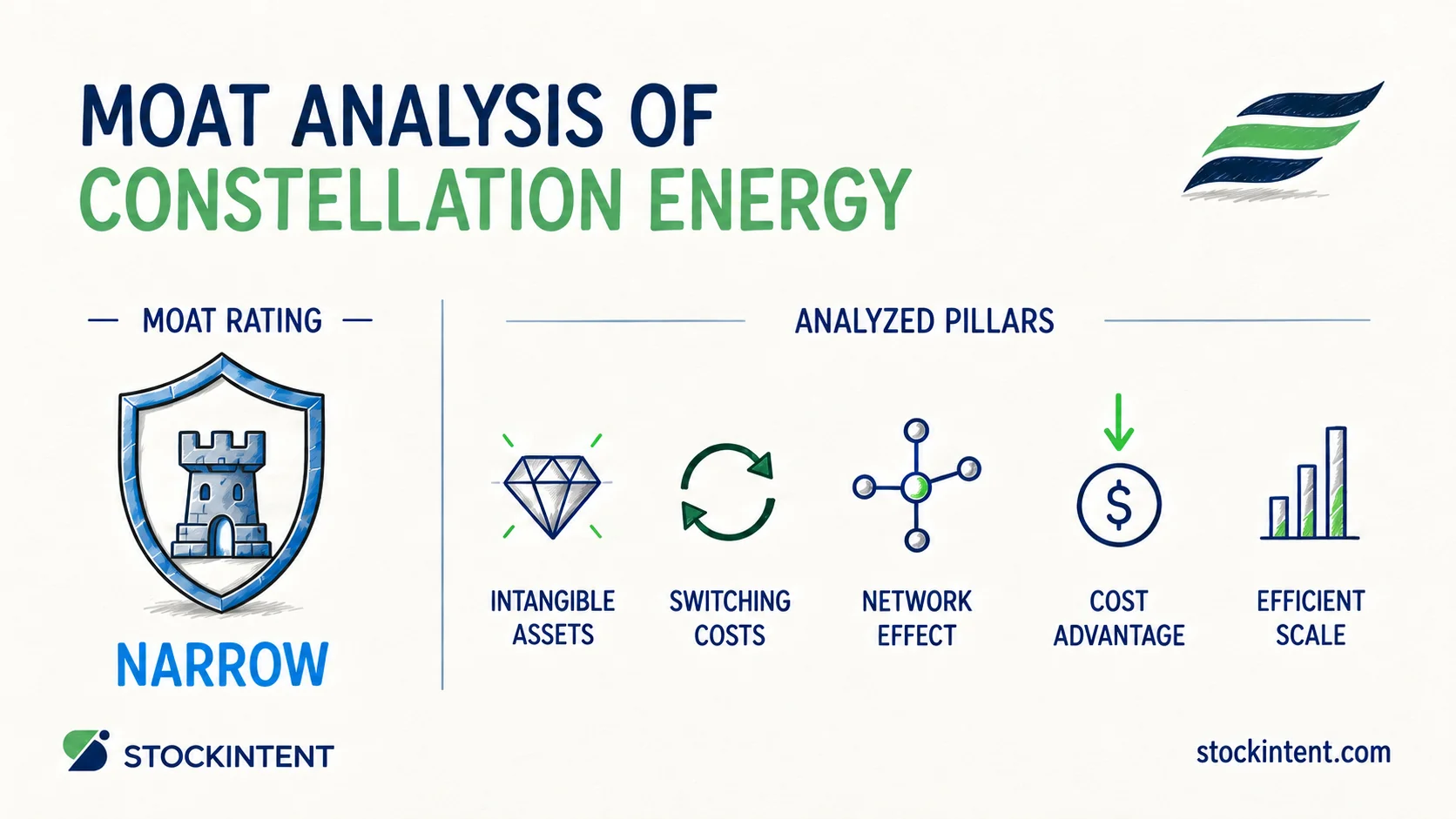
We rate Robinhood Markets a narrow moat with a stable trend and medium uncertainty. That advantage rests on intangible assets, specifically a strong brand with younger mobile-first investors, and a lean cost structure. Weak network effects and incentive-driven switching costs limit the moat.
Recent financial performance highlights this dynamic clearly. In Q2 2026, revenue reached $1.31 billion, up 32% year over year. At the same time, ARPU rose 24% to $187 and the margin book grew 127% to a record $21.6 billion.
Here are our key takeaways:
An economic moat protects returns on capital across multiple cycles. Below, we evaluate Robinhood across the five traditional moat sources, review its competitive trajectory, and assess structural risks.
Robinhood's competitive position stems from two primary strengths: a recognizable brand with novice investors and an efficient cost base. The remaining three moat sources contribute almost nothing. This profile supports a narrow moat rating, matching the view in Morningstar's 2026 initiation coverage. We demand durable returns across full market cycles, which the benign 2026 climate has not tested.
Morningstar's 2026 analysis identifies intangible assets as Robinhood's most credible moat source. Analysts emphasize brand equity among mobile-first investors and a product experience tailored to smaller accounts. Early customer acquisition matters because financial habits form quickly, which raises natural barriers to moving elsewhere.
At the same time, this brand remains narrower than traditional consumer franchises. The firm relies on user experience and demographic appeal rather than proprietary intellectual property or regulatory protections.
On the Q2 2026 earnings call, management noted that a disciplined cost structure allows the company to self-fund growth. Digital distribution minimizes acquisition and servicing expenses, letting Robinhood introduce new products without tapping outside capital. While real, this edge remains vulnerable over time because competitors can easily automate workflows and refine mobile interfaces.
Pro Insight: Robinhood posted a 57% adjusted EBITDA margin in Q2 2026. High margins often get confused with durable competitive moats. These profits reflect favorable volumes in options, margin lending, and crypto during an active bull market. Sustainable moats require pricing power and customer retention through severe bear markets, which Robinhood has yet to navigate.
One independent moat analysis labels Robinhood's customer retention as manufactured. Features like Gold memberships, IRA matching, direct deposit, and credit cards add friction to departures. Well-capitalized peers can easily replicate those cash incentives. Account transfers are routine, and modest average balances lower the friction of closing an account.
A stock analysis from Beanvest highlights the primary issue here. Retail brokerages lack two-sided network effects because an extra user does not improve execution quality or liquidity for anyone else. Community boards and social feeds spur user sessions, but pure app usage does not constitute a network effect.
Efficient scale moats occur when niche markets support only a few profitable incumbents. The retail trading industry is highly saturated. Industry leaders like Schwab and Fidelity possess massive scale, while new fintech platforms continue to launch. Robinhood gains no protection here.
Scale advantages become evident as client assets, deposits, and revenue per user expand. In Q2 2026, Robinhood reported 28.4 million funded customers, $369 billion in total platform assets, and $21.7 billion in net deposits. That pace represents a 28% annualized deposit growth rate against total platform assets. In addition, Gold reached 4.8 million subscribers as ARPU rose 24% to $187. Users are depositing larger sums and purchasing premium services.
We see two essential caveats in these metrics. First, pricing power remains unproven through down cycles. Revenue and ARPU gains follow market turnover, rising asset balances, and product introductions rather than higher structural take-rates. Second, company filings show Q1 and Q2 2026 platform assets benefited from market appreciation and acquired assets. Rising equity markets drive a portion of this asset expansion.
Industry comparisons provide helpful perspective. According to a third-party competitor summary, Robinhood generates higher net income than Coinbase and Interactive Brokers on lower total revenues. This reflects solid operating leverage, even as the firm trails Schwab and Fidelity in comprehensive wealth services.
We rate Robinhood's moat trend stable, with slight widening in retail engagement. Customer totals confirm this expansion: funded accounts increased from 27.6 million in April 2026 to 28.5 million in July 2026, according to Robinhood's monthly operating data. Monthly active users hit 14.1 million in Q2 2026, an increase of 1.3 million over the prior year.
The commoditized nature of retail trading counterbalances these user gains. Zero-fee transactions are now standard across the brokerage industry. Robinhood competes directly with Schwab, Fidelity, Interactive Brokers, Coinbase, SoFi, Cash App, Revolut, and crypto platforms like Hyperliquid across retail finance.
Brokerage competition has shifted toward ecosystem breadth, deposit costs, and application utility. Robinhood's addition of options, crypto, retirement accounts, credit cards, and prediction markets supports this platform strategy. Becoming a primary financial portal represents the clearest path to widening its competitive moat.
We monitor several key performance indicators over the next three to five years:
We assign a Medium uncertainty rating. This score measures the potential dispersion of long-term business performance rather than short-term price volatility. Robinhood warrants this middle rating despite strong operating margins because its underlying revenues depend heavily on retail trading volumes.
Revenues remain exposed to market cycles. In Q2 2026, transaction-based revenue increased 44% to $776 million, powered by event contracts, options, and equities, while crypto revenue fell 38%. In Q1 2026, transaction revenue rose just 7% while crypto dropped 47%. The company has a solid balance sheet, supported by $2.6 billion in trailing adjusted EBITDA at a 56% margin through Q1 2026.
Regulatory scrutiny surrounding prediction markets, event contracts, and gamification introduces meaningful uncertainty into future projections. While product diversification supports top-line growth, regulatory questions widen the distribution of possible business outcomes. That prevents us from assigning a Low uncertainty rating.
Our assessment remains a narrow moat, a stable trend, and medium uncertainty. The moat relies on Robinhood's brand affinity with younger investors and an efficient cost base. Network effects are nonexistent, and marketing incentives create weak switching costs.
Two variables will determine future performance. First, Robinhood must convert trading accounts into primary banking and retirement relationships to maximize customer lifetime value. Second, regulatory clarity around prediction markets and event contracts will shape volume growth in newer product verticals.
Robinhood has yet to prove that its high engagement and account retention can endure through an extended bear market. We view current margin strength as cyclical rather than structural, and we will track funded-account additions and relative peer revenue to gauge whether this moat expands.
This article is for informational and educational purposes only and is not investment advice.
Start your 7-day free trial and find quality compounders faster.
— StockIntent Score ╌ S&P 500